
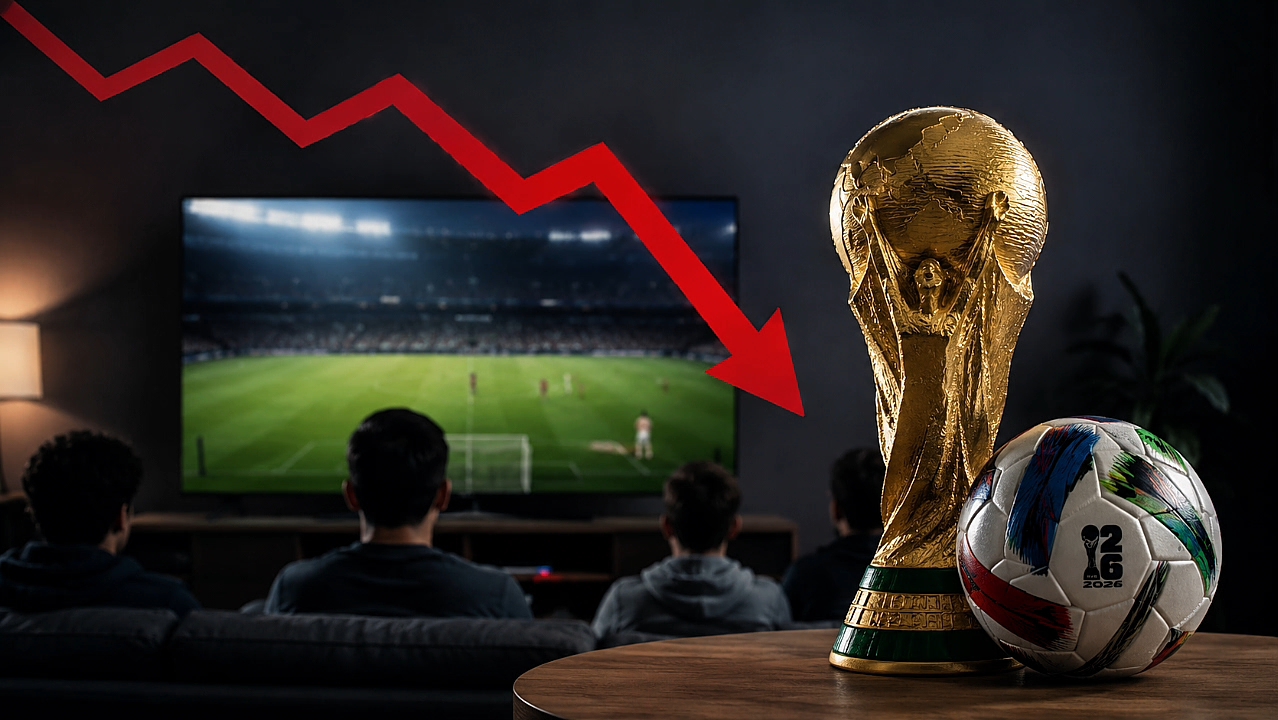
A new equation regarding the global viewership of World Cup football and its commercial future is currently circulating on the tables of sports analysts. The lion’s share of FIFA’s revenue comes from broadcasting rights and live sponsorships. However, the main cause of concern for football experts is the ‘unfavorable Time Zone’ of the upcoming World Cups, coupled with three countries (India, China, and Bangladesh) that represent almost one-third of the world’s total population.
According to experts, if the massive population of these three countries cannot be retained on screens through live broadcasting, the possibility of a major collapse in future World Cup viewership is certain.
Based on real facts, data analysis, and statistics, this equation is discussed in detail below:
1. The Core Foundation of Global Viewership: Asia’s ‘Three Brothers’
Statistics show that the current global population has crossed 8 billion. Among this, the statistics for these three countries are:
-
India: 1.4 Billion+
-
China: 1.4 Billion+
-
Bangladesh: 170 Million+
Altogether, this is a massive market of about 2.97 billion people, which is approximately 37% of the total global population (1 out of every 3 people). The football market in Europe and Latin America is now at a ‘saturation point’. It is impossible to generate new viewership from there. Therefore, FIFA’s commercial target is now aimed at these ‘three brothers’ of Asia.
2. The Main Problem: ‘Time Zone’ or Time Difference (The Time Zone Trap)
According to football experts, the biggest reason for the drop in viewership is going to be the time zone or time difference.
The upcoming 2026 World Cup will be hosted in the United States, Canada, and Mexico. In 2030, it will be in Spain, Portugal, Morocco, and South America. The time difference between these countries and these three Asian nations is dreadful:
-
Reality: When matches are played during prime time (evening or night) in America, the time in India, China, or Bangladesh will be from 2:00 AM to 6:00 AM.
-
Plunge in Viewership: Many might stay awake to watch the final or semi-final matches, but people will not sacrifice their sleep and the next day’s office or school for regular group stage matches.
-
Highlights Culture: The current generation has a short attention span. Instead of staying up all night to watch a long 90-minute match, there is a growing trend of waking up in the morning to watch a 3-minute ‘YouTube highlight’. And FIFA or broadcasters do not earn the same ad revenue from highlights as they do from live matches.
3. Country-by-Country Analysis: Emotion vs. Reality
-
China: The Silence of a Massive Market: It was once thought that China would be the next superpower in football. But due to the downfall of the Chinese Super League (CSL) and the disappointing performance of the national team, the younger generation is leaning more towards e-sports (gaming) and basketball than football.
-
Commercial Risk: Chinese sponsors like Wanda, Hisense, and Vivo pay millions of dollars to FIFA for live TV audiences. If the match is at 4:00 AM local Chinese time, these sponsors will no longer invest hefty amounts of money.
-
-
India: The Shadow of Cricket and Seasonal Football: The popularity of World Cup football in India is sky-high in Kerala, West Bengal, and the Northeast. The 2022 Qatar World Cup (which had a very favorable time zone for India) broke all viewership records. This will take a completely different shape for the 2026 World Cup.
-
Commercial Risk: India’s fanbase is primarily ‘seasonal’. The vast middle-class society of India does not possess the madness to wake up at 3:00 AM to watch group-stage matches of European or Latin American teams, because football is not a primary emotion for them like cricket is.
-
-
Bangladesh: The Harsh Reality Behind the Emotion: Compared to its population, the madness in Bangladesh surrounding Brazil and Argentina is far greater than in many footballing nations across the world.
-
Commercial Risk: Even though this emotion is strong, Bangladeshi viewers will have to battle with the time zone. Only hardcore fans will watch the 3:00 AM or 5:00 AM matches. Ordinary viewers, who increased viewership by watching prime time matches during the Qatar World Cup, will choose sleep in the 2026 or 2030 World Cups.
-
4. Collapse in Broadcaster and Sponsorship Economy
According to football data analysts, people only provide regular viewership when their own country is playing or when the match is at a convenient time.
-
Decline in Advertising Value: The advertisements shown during a live TV match hold the highest value. If live viewership decreases in this Asian market of 3 billion people, regional broadcasters like Star Sports, Sony Pictures, or others will not agree to pay FIFA the same massive sums for broadcasting rights as before.
Conclusion: What is the Way Forward for FIFA to Survive?
To prevent this certain collapse in viewership, FIFA has already taken a major step—expanding the number of World Cup teams from 32 to 48. Its main objective is to provide an opportunity for more countries from Asia (especially China or India) to play in the World Cup.
According to football experts, viewers will only overcome the barrier of time zones and stay awake at night to watch a match if their own country is playing in the tournament. But if India, China, or Bangladesh fail to secure a place on the big stage regularly, and if matches continue to be held in the middle of the night, then in the upcoming World Cups, FIFA’s viewership numbers from this massive market of ‘3 billion people’ will only remain on paper; in reality, it will turn into a massive void.
(Source: FIFA Commercial Report, Global Sports Broadcasting Data, and Asian Football Viewership Analysis)